Syrian Football: Who Chooses Who Leads It?
Today’s result against Kuwait is not the root of the problem. The root lies in the path by which an official reaches his seat, and in a league that cannot pay its players yet is expected to produce a national team.
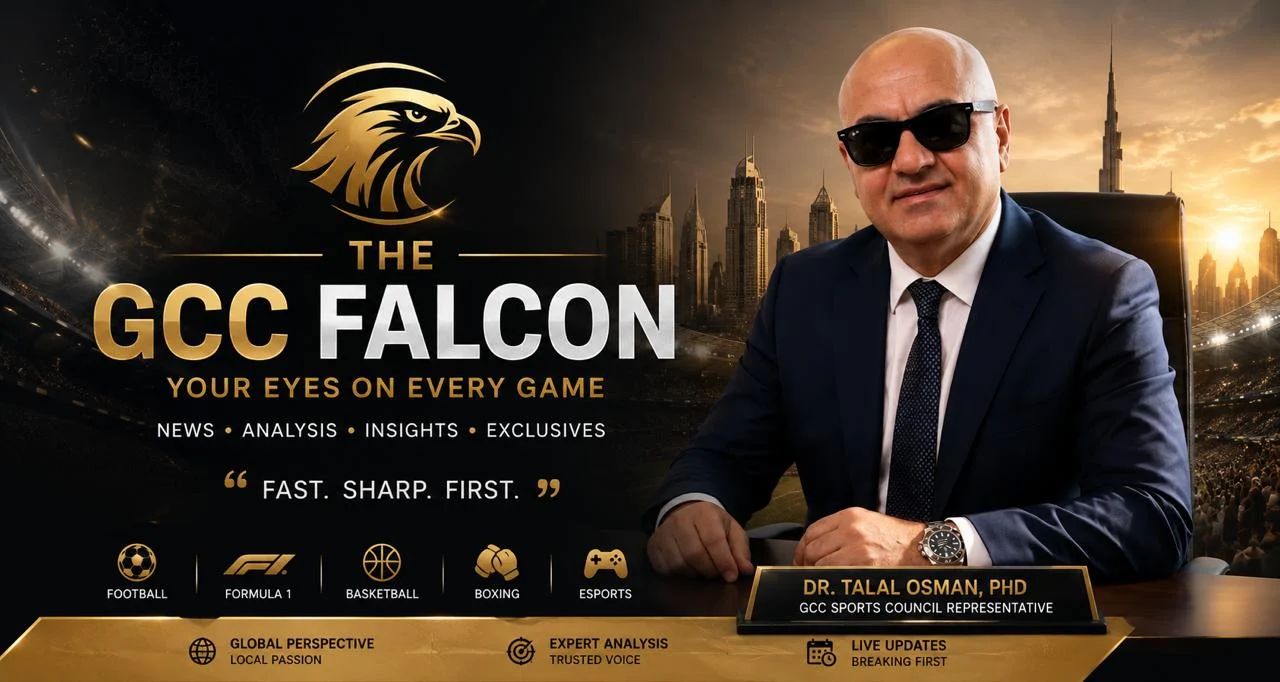
Dr. Talal Osman, Director General, GCC Sport
Who chooses the sports official? The question appears simple on the surface, yet in my view it leads to one of the most complex dilemmas in sports administration. When we see strange decisions issued by some officials, or administrative failures that are hard to explain, a more important question than the decision itself arises: How did this official reach his position? And who became convinced that he was the right person to manage this sector?
The problem lies in the gap between what the regulations say and what happens on the ground. Federations, Olympic committees, clubs, and league associations have carefully written conditions, criteria, and qualifications. But are they applied to everyone with the same rigor? And if they are bypassed, who has the right to bypass them? And in whose interest?
A university degree, no matter how high, is not enough on its own to run a federation, a club, or a ministry. Sports administration is accumulated knowledge, an understanding of the nature of competition, and an awareness of the impact of decisions on clubs, players, and fans. Those who lack this manage sport the way a government department is managed, then wonder why results do not follow from a decision.
The question begins with Kuwait
Today’s result against Kuwait at the Friendship and Peace Stadium [final result to be inserted here] should not be read in isolation. It is a link in a chain: a two-goal defeat to Belarus in June, a draw with Jordan in September, then a 4-0 loss to Uzbekistan at the beginning of October, on a day when Syria’s only goal came off an opponent’s own defender.
The official numbers tell a different story, and here lies the paradox. The Spaniard José Lana entered today’s match with 11 wins in 21 games, including eight victories in 11 official matches, plus qualification for the Asian Cup and a quarter-final place in the Arab Cup. Yet a large part of those figures was achieved against Myanmar, Afghanistan, and similar sides. When the level of opposition rose, the true ceiling appeared: a national team that still relies offensively on Omar Al-Somah and Omar Khribin, because what lies behind them has not yet been built.
Today, reports suggest the coach’s dismissal is ready after the November window, and that the dispute concerns his management of the team from outside the country, after the Asian Cup was postponed to 2028. The question, then, is not: Will Lana leave? The question is: Who chose him, and by what criteria? Who will choose his successor? And have the criteria changed, or will we simply change the name while keeping the method?
A league that does not pay — how can it produce?
The national team is a mirror of its league. And the mirror here is harsh: five Premier League clubs, including Al-Wahda, Al-Jaish, Tishreen, and Hittin, received conditional licenses this year because of accumulated unpaid dues to players and coaches, and were barred from registering any new players. Three of them were denied Asian licenses for the same reason. Add to that matches played without spectators, weekly fines for throwing bottles and stones and insulting referees, and coaches dismissed before winter even ends.
This is not merely a technically weak league. This is a league without an economy. A league that does not pay its player’s salary on time has no right to ask him about his performance.
Where is the sports revolution?
Syria has entered a new phase in almost everything. But sport does not change by swapping the signs. A sports revolution is not new faces on the podium; it is new rules for reaching it. As long as the answer to the first question — who chooses, and how — remains unchanged, we will continue to change coaches the way we change shirts, and wait for the pitch to fix what the offices have ruined.
What do we lack?
First, clear and binding selection criteria. For every technical and administrative position there must be written conditions published before the appointment, not after, and no one may bypass them.
Second, genuine club licensing. No club may participate unless it has an audited budget and settles its obligations. The conditional licensing that is repeated every season is not reform; it is a postponement of the crisis.
Third, a national youth development project. Qualified coaches, regular youth and junior leagues, and a clear link between age-group teams and the senior national team. This is where the replacements for Al-Somah and Khribin will come from, not from the citizenship market.
Fourth, a professional league in the economic sense. Suitable stadiums, professionally managed broadcasting and sponsorship rights, and revenues that return to the clubs.
Fifth, accountability. A published periodic evaluation of every official and coach against stated goals and figures, for which both the appointee and the appointing authority are held responsible.
Syrian football does not lack fans, talent, or passion. What it lacks is that every official, before sitting in his chair, is asked the question with which we began: Who chose you? And why you?