A compass that points towards a star is where the first adventure begins. In The Secret of Vega, five friends follow a trail of light through a star gate and into a city above the clouds. It is the opening story of CyKid World, an illustrated children’s storybook project created by Gabriel Nicolaev, known as CyGuru, and launched in Dubai.
The storybook is available in six languages: Arabic, English, Romanian, Russian, Spanish and Simplified Chinese. Families can choose a language on the website and open a story without creating an account. The books are presented for children aged four to nine, and the site is designed for parents and children to read together.
Eight adventures on the story shelf
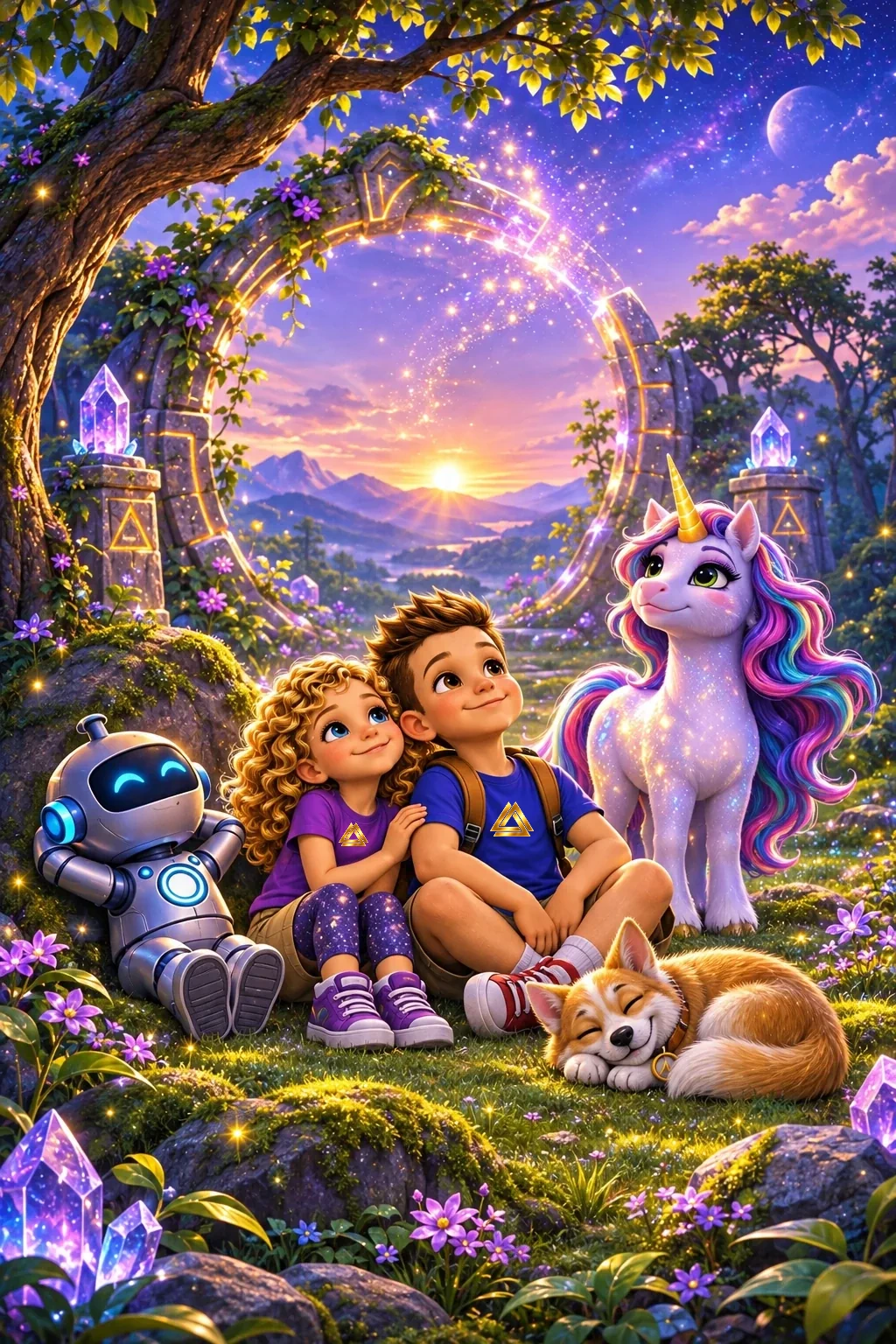
CyKid is the curious explorer, and his younger sister CyLuna brings a more reflective eye to the group. They travel with CyUni, the imaginative friend, CyBot, the problem-solver, and CyDog, their brave little companion. Each adventure gives a different member of the group a chance to notice something the others have missed.
The Secret of Vega introduces the friends in twelve illustrated scenes. In The Forest of Questions, a woodland song goes missing. CyLuna and the Lost Little Star follows a small light trying to find its place in the sky. In CyBot and the Kindness Code, a broken kite gives the robot a reason to rethink how he helps. Further adventures take the friends to a city above the clouds on Venus, a garden that has lost its light, a valley of sleeping giants and a forest whose animals depend on darkness to find their way.
Start with one story tonight
Open The Secret of Vega in English or read it in Arabic. Let your child turn the pages and stop at the picture they want to talk about. When the compass lights up, ask where they think it is pointing and what they would take along for the journey. For a different adventure, explore the CyKid World story shelf together and let your child choose the next book.
How the first book introduces its world
Vega’s opening scene begins in a forest at evening. The compass is familiar enough for a young reader to recognize its job, so the moment it points up carries the scene. The friends each respond to the same clue in their own way. CyLuna pays attention to the star. CyBot studies what is happening, while CyDog attends to what is close at hand. Read that scene aloud, pause at the end and ask what each friend has noticed. A child may remember a sound or a movement that the adult passed over. That difference gives you something specific to talk about when you turn the page.
The chapter list lets families see how the setting changes without having to read ahead. It begins with the compass and a door among the trees, then moves through a quiet city, a garden above the clouds and a room of many paths. The early chapters are a natural place to start with a child who enjoys maps and directions. Ask them to draw two arrows on a sheet of paper, one for north and one for the direction the compass takes in the story. They can add a landmark as each scene introduces one, then use the drawing to explain the journey in their own order.
Which book might your child pick?
A child who likes mysteries that begin close to home could start with The Forest of Questions. Its missing song gives you something to listen for before you even open the book. Make a short list together of sounds that might belong in a forest. A branch moving, an animal calling and feet brushing against dry leaves all make different sounds. After the first few pages, ask which sound your child would follow and where it might lead. The project lists the story as twenty-four illustrated scenes, so a family can pick a stopping point and leave the rest of the search for another evening.
CyLuna and the Lost Little Star gives younger listeners a clear reason to follow the journey. A light is out of place and has to find where it belongs. Before reading, let your child tell you what they would look for if they had to find a small light in a large sky. They might suggest moving away from a bright window, waiting for their eyes to adjust or asking someone to look with them. Those ideas can become predictions to revisit later. The premise also gives an older sibling an opening to ask the younger one what they think the star needs.
Families who like making and fixing things may recognize the starting point in CyBot and the Kindness Code. A kite breaks and the robot arrives with a plan. Try pausing to ask what questions your child would ask the person holding the kite before picking up any tools. They may want to know where the line broke, what the kite meant to its owner or whether the owner wants a hand at all. That small conversation follows the book’s interest in listening. Afterwards, a child can invent a second problem for CyBot and decide how he would approach it after what he learned.
The adventures on Venus and the Planet of Living Light offer different ways into a discussion about clues. The Venus story introduces a beacon following a false star, while the Planet of Living Light starts with a garden going quiet and a young alien trying to explain it. Ask your child to keep two short lists while you read: things a character has seen and things that character thinks might have happened. A drawing can stand in for a list if writing would interrupt the reading. When a new clue arrives, see which idea the child wants to revisit and what made them reconsider it.
The longer books also offer different settings for a family reading over several evenings. In CyKid and the Sleeping Titans, a knock draws the friends towards a valley of sleeping giants, where they meet a young mapmaker named Iri. In CyKid and the Secret Paths of the Night, a beacon interrupts journeys that animals were already making in the dark. If your child chooses the forest story, ask them what routes a moth, a bat, a hedgehog and a fox might take after sunset. Use their questions as a list of things to look up together later, once they have finished the fictional adventure.
Reading across the six languages
For families in Dubai who use more than one language at home, the language links give adults and children a straightforward way to open the same first story in the version they prefer. A parent might read the Arabic page aloud and an older sibling might read the English page. A grandparent who is more comfortable with Romanian, Russian, Spanish or Simplified Chinese can start with a version they feel comfortable reading. Families can keep one language for the whole story or compare a single scene across two editions when a child asks how a particular expression sounds.
A useful comparison can begin with something everyone can see. Find a picture of the compass or point out a character, then ask how someone in the family would describe it in their own words. Children can give the answer aloud, point to the picture or act out what happens. The person reading can then say which word they would use at home. In a family with two readers, one can read the page and the other can ask a question afterwards. That gives each language a role in the conversation without interrupting every sentence to explain it.
Make room for the child’s own version of the story
The shelves group adventures under labels such as curious discoveries, kind hearts and bedtime magic. You can use those labels as a prompt when a child is deciding what they feel like reading. Give them time to compare two covers and tell you what they expect from each one. One child may choose the forest because of the animals on the cover. Another may pick a space adventure because they want to see a city above the clouds. The choice can change from one night to the next, especially if a previous story has left them with a question about one of the characters.
If a child wants to stop after a few pages, invite them to name one scene worth returning to. They can retell it to another adult, sketch it or give the next chapter a title of their own. The website says that the reading position stays on the device, which makes it practical to pick up a longer story on another evening using the same device. You can also start again at the cover if the child wants to show a sibling how it begins. Having the child give the recap is a simple way to find out which detail made the strongest impression.
For a family trying the project for the first time, one small plan is enough. Open the first book in the language your child wants to hear. Read the compass scene together, let the child make a prediction and pick another page if they want to see what happens. If you have two children reading along, give each one a turn choosing the question to ask. The books can also be a way for relatives to share a conversation from different homes. Send them the link to the story in the language they use, then ask everyone which of the five friends they would take on an adventure and why.
Illustration: CyKid World.
Talal Osman
Source: www.cykidworld.com