Why Donis Is Betting on the Ball Before Anything Else
Possession dominates Saudi Arabia’s training, set pieces deliver the goals, and the high press arrives on the eve of the South Korea test
Dr. Talal Othman, General Manager, GCC Sport
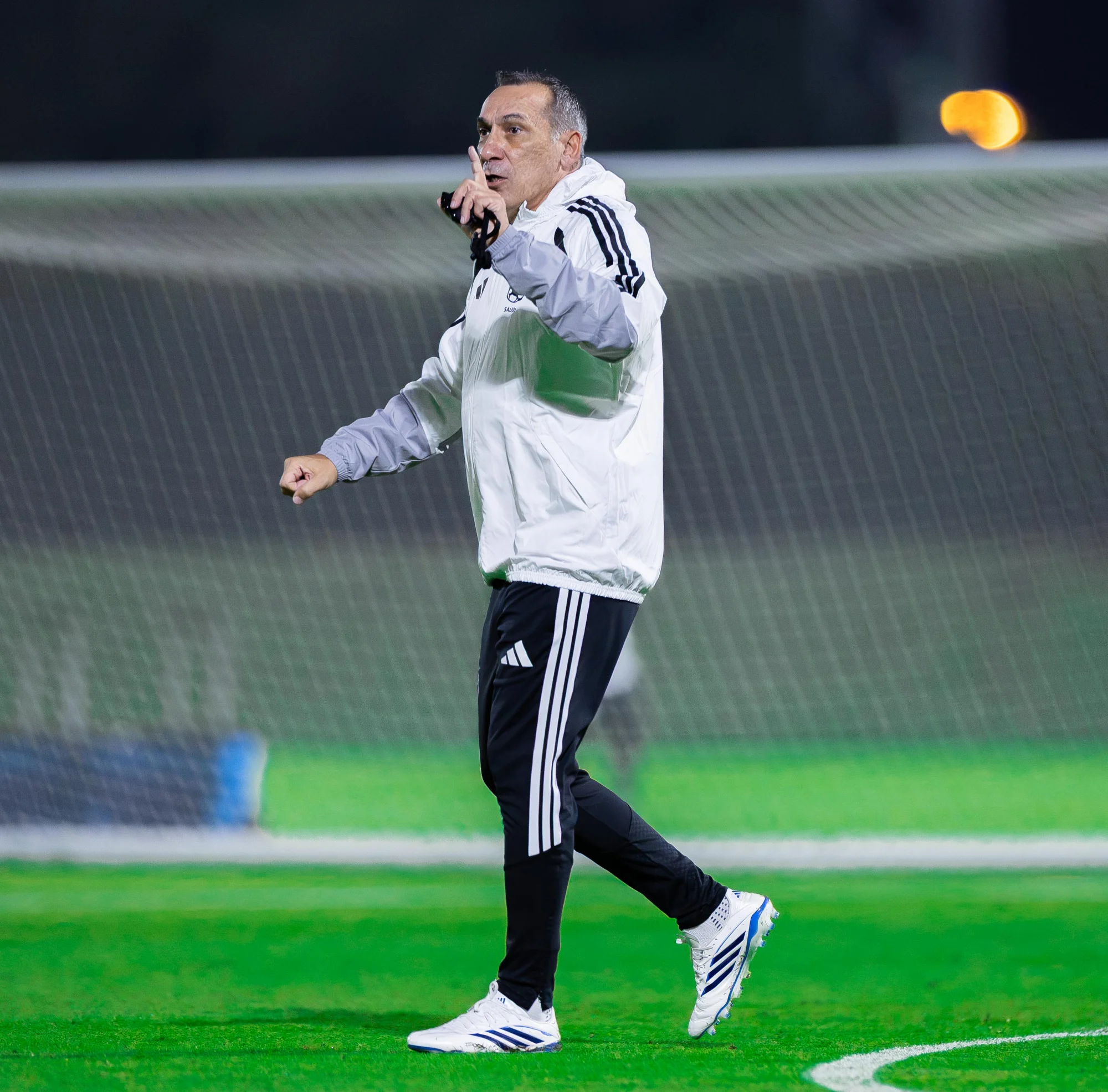
Numbers do not flatter anyone. Since the Greek coach Donis took charge of Saudi Arabia, he has overseen more than 42 training sessions, from the United States to the current camp in Doha. In 22 of them, possession was the lesson. More than half of the daily work has gone to a single question: who owns the ball?
Possession as identity, not as a drill
When a coach repeats one exercise this insistently, he is not training a skill; he is planting a conviction. Donis wants a side that builds from the back, passes under pressure, and sets its own tempo instead of chasing someone else’s. That is why passing ranks third among his priorities, completing the same idea: the ball is a defensive tool before it is an attacking one.
The paradox in the figures
Set pieces come second with 15 sessions, and here the return arrived faster than anywhere else. The Green Falcons improved at both ends, and their goal at the 2026 World Cup against Uruguay came from a set piece, finished by Abdulelah Al-Amri.
There lies a paradox worth pausing on: the philosophy says possession, the scoreboard says set piece. The most repeated drill has yet to turn into goals from open play, while the second one paid off on the biggest stage. Possession that does not end in a chance remains a statistical luxury, and that is the gap Donis must close: end product in the final third.
The high press: a new chapter
In the second session of the Qatar camp, the players worked tactically on the high press for the first time. The timing is no accident. A team that has learned to keep the ball is now learning to win it back early, the other half of any serious possession project. Introducing it days before facing South Korea is a calculated gamble: either its outline shows quickly, or the space behind it is exposed.
Doha: two schools, one examination
Saudi Arabia meet South Korea on Friday 13 November at 5:30 pm, then Uzbekistan on Tuesday 17 November at 6:30 pm, both at Jassim bin Hamad Stadium.
The Koreans play at high tempo with rapid transitions, a direct test of the possession idea itself: every ball lost in the build-up becomes a counter-attack. Uzbekistan, physically strong and tactically organised, pose the opposite question: what do you do with the ball when the opponent hands it to you and shuts the doors? Two matches, two sides of the same coin.
After the camp
Once the camp ends, Donis will submit his technical report to the Saudi federation’s technical department, a new procedure meant to map out future camps. More importantly, the department is preparing for every scenario, whether the coach stays or leaves, so that each staff continues the work of its predecessor across all age groups. It is the most mature idea in the whole picture: a project larger than the man running it.
The verdict
Donis focuses on possession because he is building an identity, not a match plan. But identity is measured by what it produces, not by what it repeats. The Doha friendlies will not be judged by the result, but by one answer: do Saudi Arabia now know what to do with the ball once they have it?