The Shadow Award: Who Makes Asia’s Best Player, the Pitch or the Rulebook?
By Dr. Talal Othman | General Manager, GCC Sport
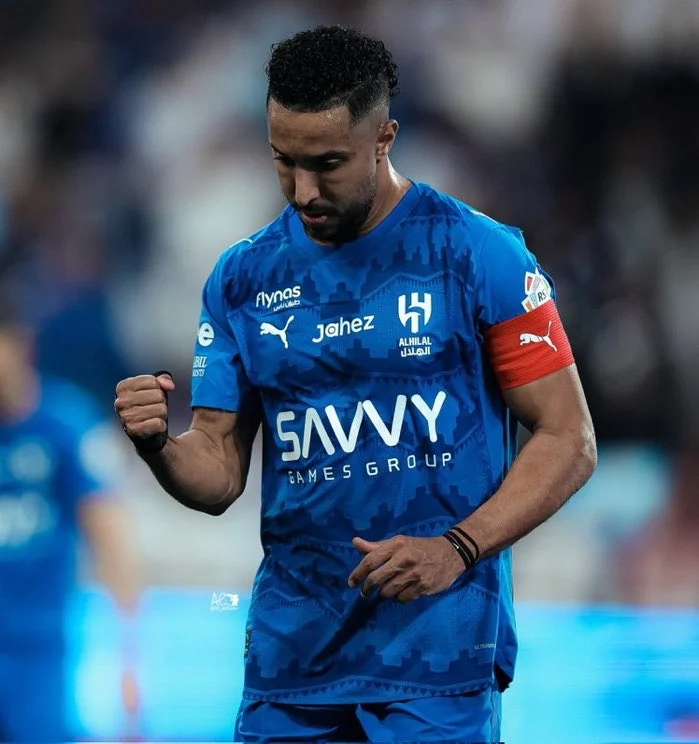
Tomorrow, Thursday, Salem Al-Dawsari will stand on the stage of the Aksra Theatre in Bangkok. He can do something that no player did before him. If he wins, he will be the first player to win the AFC Player of the Year award 3 times, after 2022 and 2025. His rivals are his Saudi teammate Firas Al-Buraikan and the Iranian goalkeeper Alireza Beiranvand. But the main question is not about these 3 names. The main question is this: what does the award measure?
1. The points machine: who really chooses?
Many people think that journalists or coaches vote for the winner. This is not correct. Since 2006, the AFC has used a weighted points system. The points come from Man of the Match awards in major matches: the World Cup and its qualifiers, the Asian Cup and the AFC Champions League Elite. The Technical Study Group chooses these awards at centralised tournaments. Match commissioners and technical analysts choose them in home-and-away matches. A panel of technical experts then filters the nominees and prepares possible “scenarios” for the winner.
The 2015 framework was the base, and the AFC changed it many times. The Technical Committee approved the latest criteria in September 2026. Most importantly, the AFC does not publish the points of each nominee. It says that this keeps the suspense. This is where the problem starts. The award is built on numbers, but it hides its numbers. When there is no disclosure, doubt comes in, and every theory comes with it.
2. A memory of disputes: 3 decades of open questions
The disputes are not new. In 2005, the final choice was between Hamad Al-Montashari and Sami Al-Jaber. Al-Jaber said later that people told him about attempts to give him the award. Some media figures said that the decision changed a few hours before the ceremony. The award went to Al-Montashari, the star of Al-Ittihad, who won the Asian title 2 times in a row. That story still comes back 20 years later.
Then there was the attendance rule. For a long time, the AFC required a nominee to attend the ceremony to win. So a travel schedule became a measure of quality. Strong criticism followed, and the AFC changed the rule. In 2019, the strangest scene happened. Akram Afif won while he was in Doha with his national team at the 24th Gulf Cup, and Xavi received the award for him. In the same year, Salem Al-Dawsari was not on the shortlist at all. But he scored in the Champions League final that gave Al Hilal the title again. A rule removes a player one time and is ignored another time. This alone shows that the rulebook was never as neutral as it claims.
3. Does Asia have no stars?
It does have stars. But the award is not for “the best Asian player”, as many fans think. It is for the best Asian player who plays in Asia. Son Heung-min, Kubo, Mitoma and the Iranian players in Europe are all outside the count. They compete for a different prize, the AFC Asian International Player of the Year. The current criteria require the nominee to play in a top Asian league, in the AFC Champions League Elite and for his national team.
The Gulf also has many stars. Past winners include Khalfan Ibrahim of Qatar, Omar Abdulrahman of the UAE, Abdelkarim Hassan of Qatar, Omar Khrbin of Syria and Akram Afif, who won 2 times. So the problem is not a lack of talent. The problem is that the race is narrow by design. Only a few leagues give regular continental exposure. Even fewer clubs reach the rounds where the AFC gives the heavy points.
4. Al Hilal: a passport or a proof of merit?
This is the sensitive question. 6 Saudi players have won the award, and 4 of them played for Al Hilal: Nawaf Al-Temyat, Yasser Al-Qahtani, Nasser Al-Shamrani and Salem Al-Dawsari. This number suggests that the blue shirt makes the winner. But a closer reading is different. The points system rewards the number of major matches. Al Hilal is the Saudi club that most often reaches the late continental rounds. So each extra match is one more chance for a Man of the Match award.
Al Hilal does not give the award. But it gives the stage where the AFC counts the points. And the club name alone is not enough. Saeed Al-Owairan won with Al-Shabab, Al-Montashari won with Al-Ittihad, and Al-Buraikan is a nominee now with Al-Ahli. The rulebook does not reward the club name. It rewards the player who has more matches in front of the analysts.
5. What does Salem really have?
Salem is not a media product. He has 20 titles with Al Hilal. These include 2 Asian Champions League titles and 5 Saudi league titles. He scored in the 2019 Asian final and helped Al Hilal reach the 2022 Club World Cup final. He also scored at the 2025 Club World Cup. He is the captain of the national team that played at the 2026 World Cup. Last season he scored 8 league goals and made 8 assists at the age of 35. These are not the numbers of a player who lives on his name.
But the balance this year is different. Al-Buraikan scored the winning goal in the AFC Champions League Elite final, and Al-Ahli kept the title. Beiranvand played very well for Iran at the World Cup, and he is the most-capped goalkeeper in Iran’s history. For this reason, an Al Hilal legend said that the season’s numbers make Al-Buraikan the deserving winner. A journalist who follows Asian football spoke of a ranking with Al-Buraikan first, Beiranvand second and Al-Dawsari third. The AFC did not confirm this ranking.
the award needs a mirror
Salem deserves respect, and he deserves his place on the shortlist. But the real question is not about him. The question is this: does the AFC crown the best player in Asia, or the best player that the rules allow to win? While the points stay secret, people will suspect every winner until the system proves its fairness. The solution is simple in form but hard in will: publish the points and name the panels. Only then will the award be a verdict that everyone accepts, and not a dispute that returns every November.