Syria Does Not Need to Clone the Egyptian Experience… but a Project Similar to Morocco’s
If we step outside the Syrian option… let’s search for the best.
Respect for Alaa Nabil does not mean the choice is above criticism.
Why not look at Morocco?
Even Egyptian Al Ahly went to the Moroccan school.
Syria is not poor in talent.
Syria needs its own project.
The appointment of Alaa Nabil may be an understandable administrative step, but the real question is: why doesn’t Syrian football search for the most successful Arab model in building and development?
By: Dr. Talal Othman | GCCSport
When Syrian football looks for a technical director for the federation, the question should not be: Egyptian, Syrian, Moroccan, or European? The correct question is much bigger: What do we want from this man, and what project will he leave behind after five or ten years?
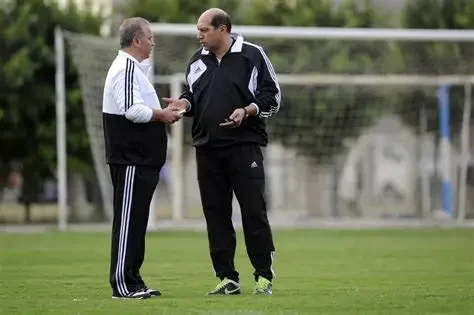
Talk of Egyptian Alaa Nabil approaching the technical directorship of the Syrian federation deserves discussion far from courtesies or sensitivities linked to nationalities. Published reports have already placed him as the leading candidate for the post, and indicated that the Syrian federation studied a number of Arab and foreign CVs before initially settling on him.
The man has a football CV that cannot be denied. He was an international player with the Egyptian national team, worked with the late Mahmoud El-Gohary in Egypt and Jordan, coached Al-Mokawloon Al-Arab and El Minya, worked in youth sectors, and then served as technical director of the Egyptian Football Association.
But respect for the experience is one thing, and believing it is the best Syria can choose is something entirely different.
Morocco is the model that deserves study
Here I reach the heart of the matter.
If Syria truly wants to benefit from an Arab experience, the Moroccan one deserves to be at the forefront of the models that are studied.
What is required is not a literal copy of Morocco, because every country has its own circumstances, resources, and particularities. What is required is understanding the philosophy of building the system: focusing on development, developing competencies, linking age-group teams to the larger project, and benefiting from national expertise while remaining open to external knowledge.
This is precisely what Syria needs.
A project, not a name.
A system, not a passing coach.
A football identity that extends from the age categories to the senior national team, not separate decisions whose direction changes with every administration.
And Hussein Ammouta provides an important lesson
The Moroccan experience is not only read through the Moroccan national team.
Hussein Ammouta is an important example of the Moroccan school’s ability to export coaches who understand the Arab environment and achieve results outside their own country.
He led Jordan to the final of the Asian Cup for the first time in its history, one of his most prominent international achievements.
Then confidence in the Moroccan school reached one of the biggest Arab clubs, after Egyptian Al Ahly turned in 2026 to Hussein Ammouta to lead its team.
Here is the paradox that should catch our attention:
If Egyptian football itself is drawing on Moroccan expertise at the level of one of its biggest clubs, why should Syria’s strategic direction be limited to cloning the Egyptian school?
I am not saying here that the Moroccan is better than the Egyptian simply because of nationality. That is precisely the idea we should stay away from.
I am talking about choosing the person with the strongest project and the CV most compatible with the needs of Syrian football.
Egypt and Jordan qualifying does not mean we must copy either of them
A national team qualifying for the World Cup is an important achievement, but it is not enough on its own to judge the quality of an entire country’s technical system.
Success of the senior team can be linked to a distinguished generation, a successful coaching staff, or favorable circumstances. Success of the federation, however, is something different, and is measured by its ability to produce players and coaches and build national teams and age groups in a sustainable way.
Therefore Syria should not say:
Egypt succeeded, so we bring in an Egyptian.
Nor:
Jordan succeeded, so we copy Jordan.
Rather, the question must be:
How do we build a project that makes Syria’s success continuous rather than exceptional?
Syria needs a man who knows the region before he knows PowerPoint
The technical director of the federation is not the coach of the senior national team.
It is a strategic position.
The person in it must know how to build a training philosophy, develop coaches, link the age-group teams, set criteria for selecting technical staffs, monitor talents, and put forward a vision that can be held accountable with numbers and results.
Even Alaa Nabil himself described the post of technical director of the federation as extremely difficult because of the many tasks, responsibilities, and continuous communication with the coaches of the various national teams.
For Syria there is an additional condition:
That he understands the Syrian personality.
That he knows the Syrian player and his psychological, professional, and technical problems.
That he knows the Arab region.
That he can reach the Syrian professional player abroad and convince him of the project.
And that he turns Syrian talent from individual cases into a real football production line.
Nationality is the last question that should be asked
Therefore, my objection to the option of Alaa Nabil, if it becomes official, will not be because he is Egyptian.
But because I want to know: why him?
If the Syrian federation presents a clear technical project, defines the man’s goals, powers, and performance indicators, and proves after a genuine study that he is the best among the Syrian, Arab, and foreign candidates, then let him have the full opportunity.
But if the choice turns into a gateway for bringing a group of coaches from the same school for the senior team, the Olympic team, and the rest of the national teams, without a central Syrian vision, then the danger appears.
Syria does not need to become a copy of Egypt.
Nor a copy of Jordan.
And even the Moroccan model should not be copied literally.
Syria needs to build its own model, and it can learn from the best available Arab experience instead of merely importing names.
Syrian talent exists.
Syrian expertise exists.
And Syrian professionals are spread outside the country.
What Syrian football lacks is not changing the nationality of the coach every few months, but establishing a system that knows what it wants, where it starts, and where it wants to go.
Here the message must be clear:
We do not want a technical director just to fill the post. We want an engineer for the Syrian football project.
If Alaa Nabil is that man, let him prove it through the project and the work.
If he is not, the Arab and international market is full of expertise, and Syria, above all, possesses its own sons capable of competing.
What is required is not to ask about the passport of the coming technical director. What is required is to ask about his thinking, his project, his powers, his achievements, and what he will leave for Syrian football after he departs.
And finally… why Alaa Nabil?
If the appointment of Alaa Nabil becomes official, I sincerely wish him success.
Success will not be a victory for Egypt, but for Syrian football.
But the primary responsibility lies with the Syrian federation.
It must explain why Alaa Nabil.
What is the project?
What are the powers?
What are the goals for the age groups?
How will the Syrian coach be developed?
And how will the success of the technical director be measured after two or four years?
The reports that spoke of his nomination already indicated the desire of the Syrian federation president to grant the new technical director broad powers to draw the strategies of the coming phase.