Maresca’s City: Beaten in the Mind Before the Pitch
Seven wins built the illusion and three defeats exposed it. The crisis is not the results, but a team that does not know what awaits it off the pitch, or who is guarding its back on it.
Dr. Talal Othman, General Manager, GCC Sport
Manchester City did not collapse overnight. Seven straight wins, the best league start in the club’s history, were hiding what Aston Villa, Brighton and Nottingham Forest exposed in quick succession. Three defeats have left City six points behind Arsenal and left Enzo Maresca facing a harder question than results: is this squad built to carry its manager’s ambition?
The verdict that hangs
Since the club was found in breach of the league’s financial rules in September, City’s players have lived in a grey zone: an appeal unresolved, a sanction unannounced. That is the real danger. Sport psychologist Dr Paul McCarthy, who has worked with major European clubs for 25 years, told the BBC that waiting weighs more heavily than bad news itself, because it strips people of their sense of control.
The players train and play, but their fate is being written in a room they cannot enter. As defeats pile up, what McCarthy calls “collective efficacy”, the group’s shared belief that it can win together, starts to erode. Past trophies offer no protection.
Numbers that do not flatter
Thirteen goals conceded in ten games is the club’s worst defensive record at this stage since 2008-09. More telling still, the first seven matches passed without a single individual error leading to a goal, and then came four in three games. That is not a decline in ability. It is a team that has started to doubt itself.
Six up front, one alone in the middle
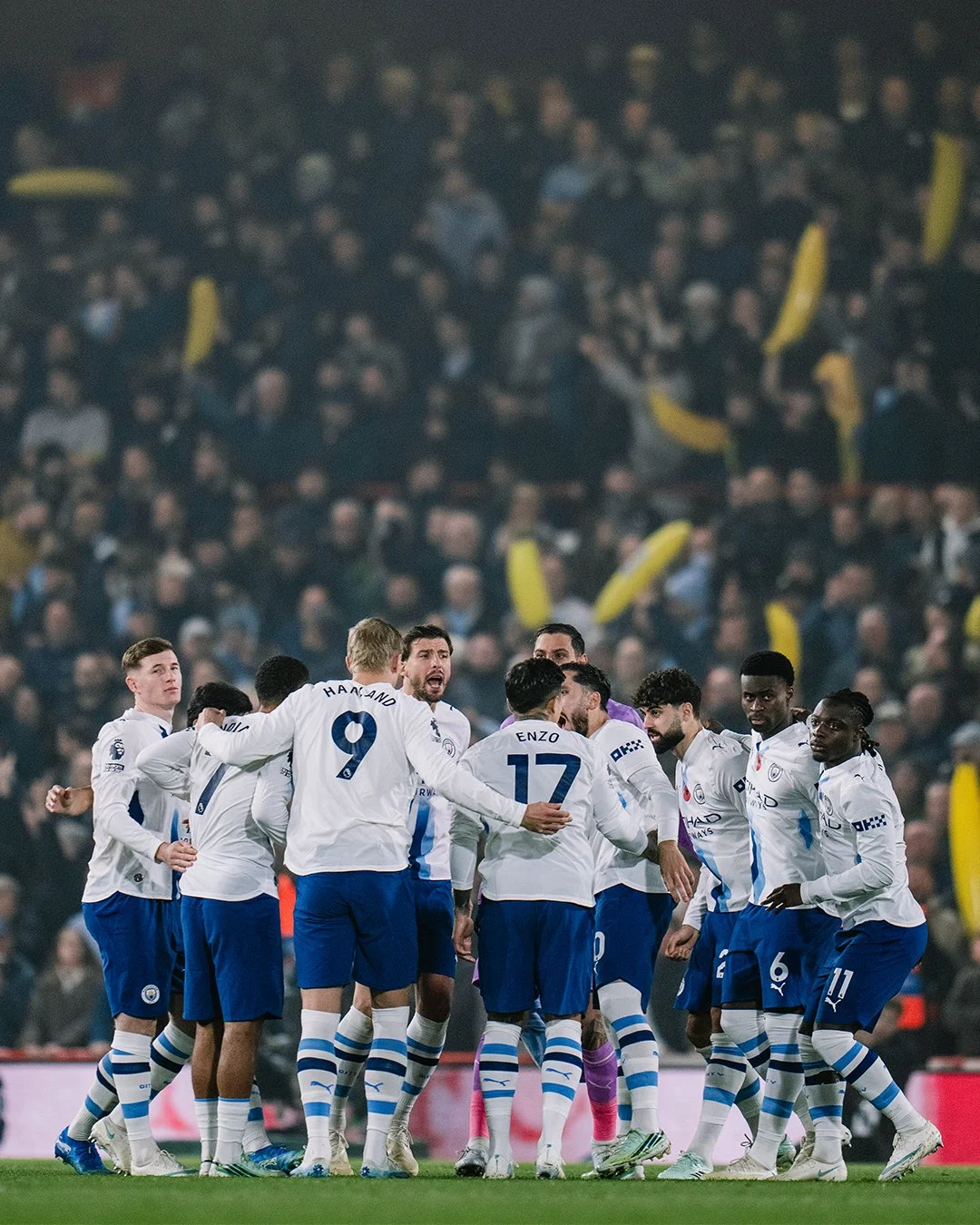
Maresca attacks in a 3-1-6: six players in the final third and a lone pivot behind them. It is a bold shape, but it asks that pivot to be Rodri, and Rodri has gone.
Elliot Anderson, signed from Nottingham Forest for more than £100m, is a player of surges, pressing and forward runs who is now asked to stand still and guard. When instinct wins and he chases the ball, he vacates the space opponents are waiting for. It gets worse when Enzo Fernández runs off the ball towards the box, leaving the counter-attack open once the first press is beaten.
Maresca admitted after Forest that his side is hit on the break when it loses the ball and fails to win duels. The admission is honest but incomplete. The lost duel is a symptom, and the disease is balance.
Who brings the ball out?
The problem starts deeper than midfield. Donnarumma is a great goalkeeper with his hands, not his feet, and the defenders have erred under pressure more than once. Last season Bernardo Silva solved this by dropping deep to receive and carry the ball through the press. Bernardo has left, as Rodri has, and the gap remains. Anderson cannot be both men at once. Ayyoub Bouaddi, who showed composure under pressure against Brazil at the World Cup, may be a card worth playing.
The bottom line
The international break gives Maresca time to think, but it solves nothing for him. The financial case is out of his hands, while the balance is his responsibility alone. He must choose between holding on to the shape and losing the race, or giving up one player up front to protect a team that can no longer afford a fourth defeat.