Romania face Poland at the National Arena in Bucharest on Saturday, 14 November 2026, knowing that defeat or a draw would leave them unable to escape fourth place in UEFA Nations League Group B4. The Romanian Football Federation lists kick-off at 21:45 local time. Gheorghe Hagi’s team then travel to Zenica to face Bosnia and Herzegovina on Tuesday, 17 November. These are Romania’s final two group games. They go into them with no points, four behind Poland, after losing all four matches in September and October.
Romania’s November squad has changed since Hagi made his initial selection. The federation confirmed that Nicolae Stanciu and Valentin Mihăilă were unavailable because of muscular problems and that Rareș Ilie had been called up. Poland’s federation named Robert Lewandowski, Piotr Zieliński and Jan Bednarek in Jan Urban’s squad. All three scored when Poland beat Romania 6–0 in Warsaw on 2 October. The return match therefore combines a selection problem for Hagi with a clear competitive requirement: Romania need their first win of this campaign before the last round can matter to their position.
Third and fourth lead to different outcomes
Sweden have ten points, Bosnia and Herzegovina eight, Poland four and Romania zero after four games each. The table can be reconstructed from UEFA’s published results. Sweden beat Romania twice and Poland once, and drew with Bosnia. Bosnia beat Romania and Poland, and drew with Sweden and Poland. Poland’s four points came from their win over Romania and the opening draw with Bosnia. Romania can reach a maximum of six, leaving Poland as the only side they can still overtake. Sweden and Bosnia are already beyond that ceiling regardless of the results in November.
UEFA’s rules for the 2026–27 edition make the distinction between third and fourth particularly important. A third-place finish keeps a team in League B. Fourth place means a League B/C play-off against one of the runners-up from League C, with the tie determining the teams’ allocations for the next edition. For Romania, Saturday is the last opportunity to keep an outright League B place available through the group. A draw would move them to one point and Poland to five, leaving a four-point gap with just one game to play.
A Romanian win would reduce the gap to one, with Poland still ahead 4–3. If Romania then won in Zenica, they would finish with six points and overtake Poland provided Urban’s team did not beat Sweden. A draw in Bosnia would leave Romania on four and require Poland to lose before the two sides could finish level. Under UEFA’s rules, the head-to-head results would take priority in that case. The six-goal defeat in Warsaw therefore has a consequence beyond the overall goals column: an ordinary one-goal win in the return match would leave Poland comfortably ahead on the direct goal difference if both teams finished with four points.
Poland’s position is different. One point in Bucharest would guarantee they could not finish below Romania, while a win would take them to seven and preserve a mathematical route to second place, depending on Bosnia’s results. Their final fixture is at home to Sweden in Wrocław. That gives Urban two reasons to take the trip seriously even though a draw would settle third place at a minimum. His team can put the danger of the League B/C play-off behind it, and it can leave itself with something more to play for against the group leader.
Why the Warsaw score needs a closer reading
Romania spent much of the first meeting with ten players after Radu Drăgușin was sent off for a foul on Lewandowski in the penalty area. Lewandowski converted the penalty, and Poland led 1–0 at halftime. He scored again early in the second half, followed quickly by an own goal from Virgil Ghiță. Zieliński and Bednarek extended the advantage before Lewandowski completed his hat-trick. The match report issued by the Polish federation identifies the dismissal and penalty as the turning point. The sequence also shows that the score grew in distinct phases, with the two goals immediately after halftime taking the game away from a team already short of a player.
The red card limits what can be inferred about how a full-strength Romania side would defend across 90 minutes. It still leaves specific situations for Hagi to examine. The original incident occurred with Lewandowski in the penalty area, where a defender had little room to recover after losing the better position. The second half included a goal after a corner, when Bednarek headed in, as well as goals that developed in open play. A useful review can separate box positioning, the first action after losing possession and the organisation of set pieces instead of attributing all six goals to the same cause.
Romania’s other results show why the return game cannot be reduced to the dismissal in Warsaw. They lost 2–1 and 1–0 to Sweden, and 4–2 at home to Bosnia. Across the four games, Romania scored three and conceded 13. Removing the Warsaw result still leaves seven goals conceded in three matches and no points. At the same time, the two one-goal losses to Sweden show that the group campaign has contained close games as well as heavy defeats. Romania need to turn the periods in which they have stayed within reach into a match in which they can score enough to take three points.
Two reference points from earlier campaigns
Romania and Sweden both reached League B by winning their respective League C groups in the previous Nations League edition. That shared starting point matters because the current standings show how quickly their paths have diverged within one promotion cycle. Sweden took six of their ten points directly from Romania, yet both meetings were decided by a single goal. The 2026–27 rules now give Romania a route to preserve their place through a play-off if they finish fourth. It would be an additional contest for the same level they earned through their League C group win.
There is an older example of Lewandowski’s influence in this matchup. He also scored three when Poland beat Romania 3–1 in a World Cup qualifier in June 2017. That result belongs to a different competition and a different squad cycle. The point of comparison is narrower: in two separate qualifying or league settings, Romania have faced a Poland side capable of converting pressure into multiple goals through the same striker. In Bucharest, protecting the space from which Poland can supply him is as relevant as dealing with his movement inside the box.
Hagi’s choices after the withdrawals
Stanciu and Mihăilă take substantial senior experience out of the available group. The federation’s list gives them 90 and 40 caps respectively. It lists Ilie, who plays for Mantova in Italy, with no senior appearance at the time of the announcement. The call-up adds an option without indicating a direct replacement in the starting team. Stanciu was listed among the midfielders and Mihăilă among the attackers. Hagi can redistribute their responsibilities across several players, and the formation and roles will only become clear when the match squad and starting lineup are published.
The available players include Răzvan Marin, with 78 caps on the federation’s list, and Ianis Hagi, with 57. Dennis Man is listed with 48 caps and 12 goals. Florinel Coman, who plays for Al-Gharafa in Qatar, is listed with 22 caps and three goals. He was also among the players the federation scheduled to appear at its media session at Mogoșoaia. These figures describe the resources available to Hagi. They do not assign a set-piece taker, guarantee a role on either flank or establish who will play behind the centre-forward.
There is also a connection to Polish club football on Romania’s side of the squad. Otto Hindrich, one of the three goalkeepers called up, is listed by the federation as a Legia Warsaw player. Ștefan Târnovanu of FCSB and Laurențiu Popescu of Universitatea Craiova are the other two named goalkeepers. Hindrich’s club affiliation gives the fixture another point of interest, but selection remains a separate decision. The more immediate issue for any Romanian goalkeeper is the quality of the protection in front of him when Poland establish possession around the penalty area.
What to watch in Bucharest before the trip to Zenica
Urban’s published selection includes several players involved in the October win. In addition to Lewandowski, Zieliński and Bednarek, the squad includes Matty Cash and Jakub Kiwior. The first leg explains why the presence of those names matters, but it supplies no confirmation of a starting lineup. For Romania, one practical test will be whether the players nearest the ball can slow the first forward pass after a turnover. Doing so would allow the rest of the team to recover its distances and reduce the number of occasions on which a centre-back has to defend the penalty area while facing his own goal.
The reverse problem appears when Romania regain possession. If the first outlet is immediately closed, a clearance can bring the same pressure back. An available midfielder or wide player gives the team a chance to carry play away from its own area and make Poland defend. Hagi said before the double-header that he wanted improvement in both attacking and defensive phases, according to Sport.ro’s coverage of his press conference. Saturday will offer a concrete way to judge that: how often Romania can recover the ball and keep it long enough to turn the recovery into an attack.
There is a separate discipline to chasing a result. Romania need a win, but the first leg showed how a penalty and dismissal can change both the score and the number of players available to pursue it. Keeping the match within reach would leave Hagi with choices in the second half, including when to add attackers and how much cover to leave against a counterattack. Those choices have consequences three days later as well. If Romania take three points in Bucharest, the visit to Bosnia remains part of the battle for third. A draw or defeat would confirm that their bid to stay in League B goes through the play-offs.
Sources · Romanian federation squad and schedule · Polish federation squad · Polish federation match report · UEFA fixtures and results · UEFA promotion and play-off format · UEFA tie-break regulations · UEFA 2024–25 League C results · UEFA archive of the 2017 qualifier · Sport.ro match coverage · TVP on Poland’s November selection
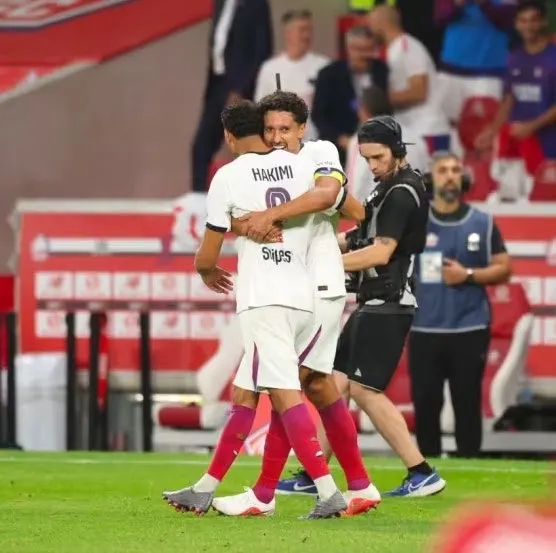
Archive photograph by PosifCool, Wikimedia Commons, 9 March 2024, CC0 1.0.
Talal Osman
Source: www.frf.ro