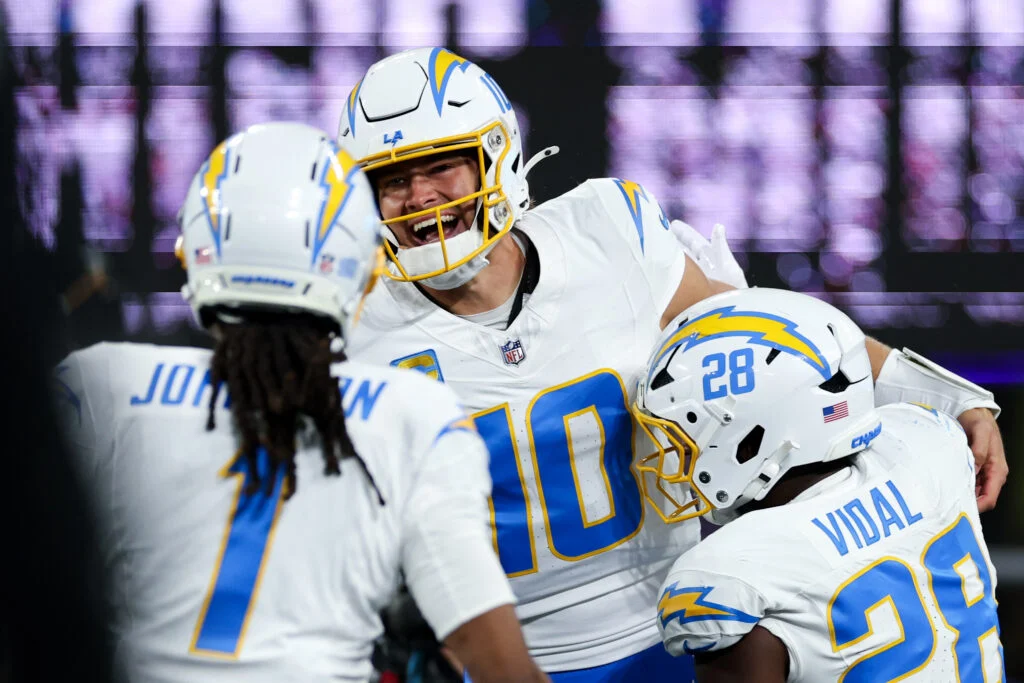
The Los Angeles Chargers beat the Baltimore Ravens 23-20 at M&T Bank Stadium, closing out a tight NFL contest with timely defense and steady special teams. In front of 69,679 fans, the visitors leaned on a 160-yard rushing day and a clean turnover sheet. Cameron Dicker was flawless from the tee, while Justin Herbert used his legs at key moments. Baltimore threw for big yardage and moved the chains, yet two giveaways and a stalled run game proved costly.
How the 23-20 took shape on the scoreboard
Los Angeles started fast in the first quarter when Justin Herbert finished a drive in the end zone and Cameron Dicker added the extra point. Dicker later tacked on a field goal, and the Chargers were up 10-0 after the opening period. Baltimore responded early in the second as Derrick Henry powered in for six and Riley Patterson tied on the extra point. The Chargers answered immediately, with Omarion Hampton punching in a touchdown that restored the two-score cushion. A Patterson field goal before the break trimmed it to 17-10 for the visitors at halftime.
The third quarter opened with Dicker splitting the uprights again to make it 20-10. Baltimore kept contact as Patterson converted from distance to pull it to 20-13. Early in the fourth, Dicker’s third field goal of the night pushed the lead to 23-13. The Ravens set up a grandstand finish when Henry scored his second rushing touchdown and Patterson cut the deficit to three. The Chargers defense and run game then did enough to see out the final minutes for a road win.
Team statistics that tilted the outcome
The numbers point to a simple story: Los Angeles protected the ball and Baltimore did not. The Ravens committed two turnovers, including one interception and a lost fumble, while the Chargers finished with zero. That swing loomed large in a game where average yards per play were identical at 5.3 for both teams. Baltimore led total yards 347 to 287, but many of those came through the air and did not erase the turnover gap. First downs favored the Ravens 22 to 15, yet drives repeatedly stalled.
The rushing split was decisive, with the Chargers piling up 160 yards on 34 attempts at 4.7 per carry. Baltimore managed only 16 rushing yards on 15 attempts at 1.1 per carry, leaving too much on Jacoby Brissett’s arm. Red zone efficiency was close, with Baltimore 2 of 4 and Los Angeles 1 of 3, but the Chargers cashed in with three Dicker field goals. Penalties were lighter for the visitors at 4 for 30 yards compared to the Ravens’ 6 for 45. Even with the Ravens averaging more yards per punt, they could not flip field position into enough points.
Standout performers in a three-point game
For Los Angeles, Herbert delivered a measured passing line of 12 completions on 18 attempts for 129 yards without a turnover. He added 51 rushing yards on 7 carries and the opening touchdown, extending key plays with smart scrambles. Rookie back Omarion Hampton set the tone between the tackles with 22 carries for 105 yards and a score. Tre’ Harris was the most productive target, catching 5 passes for 86 yards and consistently moving the sticks. Special teams belonged to Cameron Dicker, who went 3 of 3 on field goals with a long of 38 and 2 of 2 on extra points for 11 total.
Defensively, Dalvin Tomlinson notched 2 sacks to trouble a high-volume Ravens passing attack. Del’Shawn Phillips had an interception and a pass defensed in a pivotal takeaway. Tarheeb Still forced a fumble, and Elijah Molden fell on a loose ball as Los Angeles won the turnover battle 2-0. Cam Hart chipped in with 2 passes defensed, and Daiyan Henley stacked up 11 total tackles. It was a broad contribution across the unit, which held firm when it mattered most.
Big air yards for Baltimore, but too few rushing lanes
Jacoby Brissett put up volume through the air, completing 33 of 49 for 340 yards, though the stat line included one interception and no passing touchdowns. Mark Andrews was busy with 8 catches for 82 yards, while Zay Flowers added 6 for 74 but lost a fumble. Ja’Kobi Lane flashed explosiveness on a 31-yard grab within a 3-catch, 61-yard night. Rashod Bateman and tight end Josh Cuevas both chipped in timely first downs to keep drives alive. Derrick Henry was the red zone hammer, scoring two rushing touchdowns despite being bottled up for 10 yards on 10 carries and catching 5 balls for 10 yards.
On defense, Mike Green recorded 2 sacks to match the visitors’ pressure, and Kyle Hamilton led the Ravens with 10 total tackles. Marlon Humphrey forced a fumble as Baltimore fought to create answers of their own. Riley Patterson went a perfect 2 of 2 on field goals and 2 of 2 on extra points for 8 points. Chris Moore added spark on returns with 4 kickoffs taken back for 82 yards. The pieces were there, but the two turnovers and lack of balance on the ground undercut a strong passing night.
Downs, red zone and special teams, the hidden battle lines
Third down told a nuanced tale. Baltimore converted 5 of 12 for 41 percent, sustaining drives with short and intermediate completions. The Chargers were just 2 of 13 at 15 percent, yet their early scoring and control on the ground reduced the damage of those misses. In the red zone, Baltimore finished 2 of 4, while Los Angeles went 1 of 3 but leaned on Dicker for reliable threes. That blend of red zone patience and protection of the ball separated the sides.
In the field position game, the Ravens averaged more yards per punt, and LaJohntay Wester’s 20-yard punt return plus Moore’s kickoff work helped. The Chargers countered with Derius Davis’ 47 punt return yards and a 28-yard kick return. Kimani Vidal also popped a 32-yard kickoff return to flip a drive start. Even the sack totals were level, with each quarterback brought down twice. Add it up and special teams and situational defense nudged Los Angeles across the line.
What this result tells us
The Chargers found a sturdy formula on the road: run the ball, protect it, and trust defense and kicking to carry the close calls. Herbert’s mobility and Hampton’s workload produced the tempo they needed, while Dicker’s 11 points proved decisive. Baltimore’s aerial production and first-down edge will please the film room, but the rushing total and giveaways will not. Cleaning up those areas turns a narrow loss into a home win more often than not. With both teams averaging 5.3 yards per play, the margins were always going to be slim.